
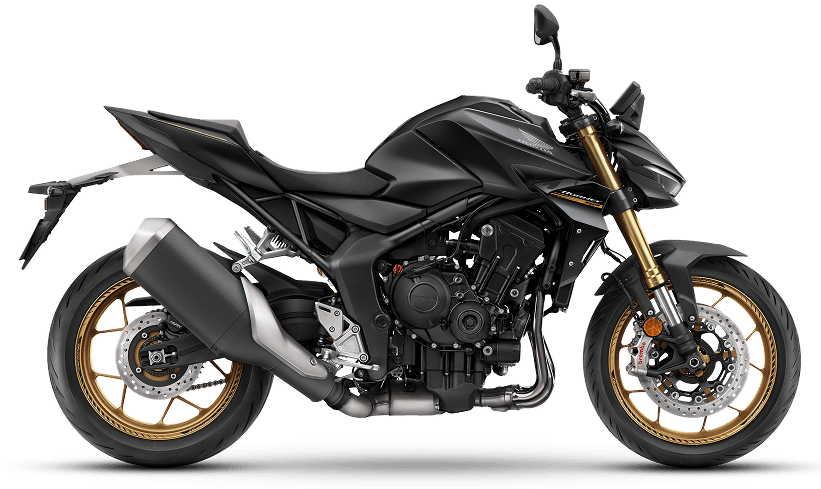
Honda CB1000 Hornet SP: We usually never begin a review with the price of the machine we are testing, but today’s bike is so significant that we’re going to do just that. And it’s even more pertinent because it comes from a company like Honda. While Honda does make fabulous machines, they don’t always have the best reputation for being competitively priced, especially in the big bike space. just cast your minds back to the CBR1000RR Fireblade or the CB500X when they were first launched in India back in the day.
However, it’s a polar opposite situation with the CB 10000 Hornet SP that you see here. At 13.3 lakh rupees, this is a bonafide 1,00 4-cylinder super naked with all the bells and whistles like Brembo brakes, OEN suspension, and a comprehensive suite of electronics. Now on paper this seems like a really sweet deal. Question is does that also happen to be the case in the real world.
Before we get on with the review, we must give a big nod of thanks to Kushru Gazdar who was very kind to let us borrow his prized possession so we could bring you this exclusive India review of the Hornet 1000.
Honda CB1000 Hornet SP: First Ride Impressions
Since we’ve already started this review in an unusual manner, we’re going to double down and get straight to how the Hornet 1000 rides because I’m sure that’s the burning question on everyone’s mind. And in a nutshell, it’s not exactly what you think it’ll be.
My first thoughts when I gently eased out the clutch and made my way out of the parking area were that this 1 cc Super Naked feels very normal to ride, and I mean that in the best way possible. Unlike some other more exotic rivals in this space, the Hornet feels like a very friendly machine to ride at lower speeds.
Seat Height and Comfort: Surprisingly Approachable
Part of the reason why I think the Hornet feels so friendly is that it has a pretty low seat height for the class. It’s just a little over 800 mm, so at 5’11 I am easily able to flatoot it.
However, to give you a better understanding of what an averages sized Indian would feel like on the machine, we have Autocar India’s residency tight tester Ashley Baxter with us. Now, once Ashley gets on the bike, you’ll see that he’s able to get the balls of his feet on the ground and that really helps you get that sense of confidence when especially when you’re handling such a heavy and powerful machine like this.
With its approachable seat height, the Hornet feels a little more manageable than its capacity suggests. Thank you, Ashley.
Riding Position: Sporty Yet Tour-Friendly
Speaking of the riding position, the Hornet has a sporty and engaging riders triangle, but it never feels too committed. As you can see, I have a slight lean down to the handlebars, but once you get used to it, this is a riding position that you could do long distances on. And this is a bike that I could see you could take touring.
Now, one little complaint that I have with the riding position is that I’m not able to properly latch onto the tank with my legs. Uh there is a tiny gap in between the upper part of my thigh and where I would hold the tank. Rishad also found this issue. He has also ridden this bike. I think this could be a subjective issue based on your size. So, I would recommend that you at least visit a Honda showroom and sit on the machine and figure out if this is a bit of an issue for you or not.
Footpeg and Exhaust Heat Shield Issue
Another thing I found that is also a subjective issue, it’s it’s mainly for people with larger feet. As you can see, my foot I wear size 12 shoes, so I am on the very large end of the spectrum. But my foot does make contact with this exhaust heat shield, especially when I ride with my toes on the foot pegs, which is most of the time on a machine like this.
Pillion Comfort: Short Distance Friendly
For those of you that are wondering what are the passenger accommodations like you can carry a pillion on this machine, but it’s definitely best enjoyed with a passenger in short bursts. That’s because this pillion seat is quite small. In fact, it’s not much larger than my hand. And the pillion foot pegs are also quite high.
Of course, this is really power for the course in the super naked category. No bike is really built for that. So, we won’t fault the Hornet too much for that.
Honda CB1000 Hornet SP Exhaust Sound
I know by now that most of you are on the edge of your seats and you really want to hear what the Hornet sounds like. So, I won’t keep you waiting any longer.
As you can hear, this is a stock exhaust in the Euro 5 era that sounds this glorious. There is a valve in the exhaust that opens at 6,000 RPM, which is when you can really hear that audio level go from ear to ear.
But even so, when you’re riding below that threshold, the Hornet has a nice deep bassy growl without being offensive to people around you. It also has a nice intake howl. It sounds very angry, very raspy, and there’s really no need to go out and buy an aftermarket exhaust as soon as you buy this bike.
This stock exhaust is genuinely usable and enjoyable on our roads.
Performance and Engine Character
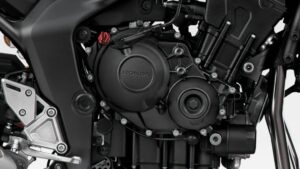
While it does weigh 212 kilos with its big 17 L tank fully brimmed, the Hornet’s chassis is set up very well, and you barely notice the weight once you get going.
Typical of an inline 4. Power delivery is smooth and progressive, at least below 6,000 RPM, and its clutch isn’t all that heavy.
Heat Management in Traffic
We also encountered quite a bit of traffic in our time with the Hornet, but credit to the Honda’s cooling system. The bike never overheated or showed signs of protestation even once.
There is some warmth to be felt on your legs, particularly your right shin, but it’s never unbearable. The weather in Mumbai is also very pleasant right now. So, how the bike tackles the scorching Indian summer is still unknown.
However, nearly all of Honda’s big bikes have an excellent reputation for heat management. And there’s no reason why the Hornet should behave otherwise.
Acceleration and High-Speed Performance
But don’t mistake its practicality and usability for a snoozefest of a machine. This is a properly rapid motorcycle and can cross 200 km per hour with two gears to spare.
The same engine that is docile and friendly below 4,000 RPM turns into an absolute screamer above that once you decide to twist the accelerator to the stop.
There are some highfrequency vibrations, but they appear past 6,000 RPM, by which point you’ll comfortably be doing serious tripledigit speeds, so this really is a non-issue.
Comparison with Kawasaki Ninja 1100 Engine
If I can draw a comparison between the Hornet’s engine and the Kawasaki 1100cc motor I experienced in the Ninja 1100 some months ago, the Honda’s power plant feels much more eager and excitable than the more sane and sensible Kawasaki.
The Hornet has a searing top end while the Kawasaki delivers most of its oomph in the mid-range.
Fuel Compatibility: Indian E20 Ready
And on the important topic of fuel, while the sticker on the CBU import denotes EU fuel compliance, however, the Hornet is compatible with Indian E20 fuel. Although high octane petrol is always welcome.
Chassis and Handling: Steel Frame Done Right
Complnting this powerhouse of an engine that’s derived from the previous generation Fireblade is the Hornet superb chassis.
Now on paper, its frame is made out of steel and it is all a single piece. So, it might seem like a bit of a step down from other more exotic European rivals. However, this is nothing that you will ever notice on the road at least.
It really is very planted, very stable at high speeds. And when you want to attack a set of corners, it really tips in very easily.
Rear Tyre Size Advantage
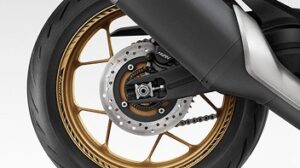
I think that’s also partly to do with the 180 section rear tire. Most Super Naked have either a 190 or a 200. However, the Hornet’s tire sizes are absolutely well judged.
It feels stable and predictable at high speeds. And it attacks corners like it means business.
Bridgestone S22 Tyres: Track-Level Grip
The Bridgestone S22 tires it ships with are also superb, and they are absolutely up for the job for a bike with a nearly 160 horsepower.
Suspension Setup: Premium Ohlins and Showa Package
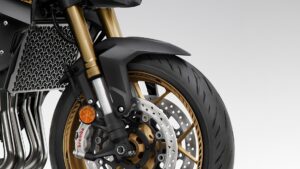
Complnting the Hornet’s wonderful chassis is the welljut suspension setup.
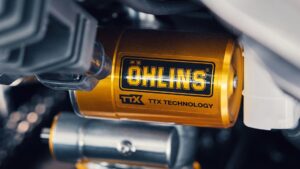
Now, you’ve got a fully adjustable Showa fork up front and an OEN TTX 36 monoshock at the back that really is topflight equipment. You could see it on bikes like the top tier Ducatti Panagales.
The suspension is well judged in its stock settings and it will keep you shielded from the worst of the road bumps even in a city like Mumbai.
And of course, it is fully adjustable so you have the option to tailor it to your riding style and your weight.
Braking Performance: Brembo Stylema Calipers
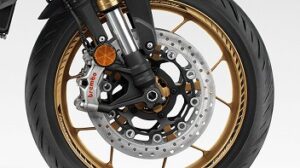
The Hornet’s braking performance is also really quite nice. You’ve got top drawer equipment like Brembo Stylema calipers up front.
However, compared to other European super nakeds like say the Ducati or even something like a Triumph Street RS, initial bite is a little more gentle on the Hornet, I think that’s probably down to do with the pads and the ABS calibration rather than any shortcomings with the Brembo hardware.
However, once you do give it a firm press, there’s plenty of stopping force to be had. Don’t get me wrong, there’s nothing wrong with the stopping power. It’s just that the initial bite is a little gentle.
I think it’ll be a welcoming trait, especially if this is your first 1,00 C big bike, then it’ll be a more welcoming thing for newer riders, especially those that haven’t had much experience with big bikes.
Daily Usability and Ground Clearance Concerns
Overall, as a road sports bike, there’s really nothing I can fault the Hornet with too much. It even has an acceptable turning radius for a bike of this size.
What you do need to be mindful of, and this is a similar story with other big bikes as well. It’s not something that’s unique to the Hornet, it’s just that you have to be mindful of the low ground clearance and you need to protect the rims over bad bumps and road imperfections.
Low Ground Clearance: A Real Concern
There is only 135 mm of ground clearance available. And what further accentuates it, especially in my book, is the shape of the sump. It’s shaped like a funnel and it is placed very, very low. So, it could be one of the first things that touches down. you do need to be a little mindful of that.
It’s a similar story with the Transp and the Hornet 750 as well. They have that conicle sort of sump shape that’s also placed very low down. But on this bike, it has the lowest ground clearance. So, you do need to be mindful of that.
Design and Styling: Muscular Yet Stealthy
Once you’re done riding and you come home and you park the bike and you look at it and the Hornet really does draw you in with its design.
Now, when it first came out, a lot of internet commentators did draw the parallel between the headlight design of the Hornet and that of the Ducatti Street Fighter.
I will admit that there is a bit of resemblance just at the front, but everything else on the Hornet is its own.
It has a very muscular sort of mass heavy at the front design. It’s got clean, sharp lines, and overall, I think this is a design that looks very nice, but it’s quite stealthy, quite muted.
It doesn’t shout for attention. It’s only available in this stealthy matte black color because only the SP variant of the Hornet is on sale in India.
I think this looks very nice for a 1000 cc Super Naked without going over the top.
Electronics and Rider Aids
What also doesn’t go over the top on the Hornet are the electronics and the rider assists. It’s got all the bases covered.
You’ve got five riding modes, two of which are fully adjustable for power, engine braking, and traction control, and three preset modes in case you don’t want to fiddle around with that.
You’ve also got a birectional quick shifter and dual channel ABS. You can also adjust the sensitivity of the birectional quick shifter. Another nice feature to have.
No IMU: Is It a Dealbreaker?
One thing I must point out is that the Hornet does not have an IMU. So, the electronics aren’t IMU assisted and they’re not lean sensitive.
However, this is nothing you’re really going to notice unless you are really a prolevel rider. Especially on our roads, it’s a very small scenario where you’ll notice the absence of an IMU.
TFT Display and Switchgear Simplicity
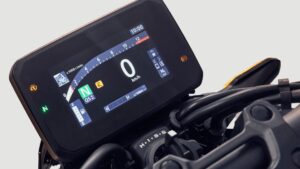
And just like the electronic aids, the UI and the interface of the display is absolutely straightforward.
Uh it’s I’ve had the bike for less than 2 days and I have figured out just about every setting on the display. You’ve got a four-way joystick. Everything is very clean, very easy to use.
And that’s another nice thing. Most modern bikes you really need like an IT technician to help you figure out all the modes and the settings, but I’m happy to report that the Hornet is absolutely straightforward in that regard.
Shared Components Across Honda Lineup
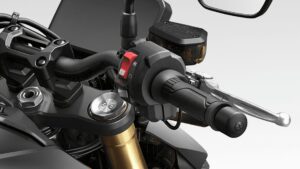
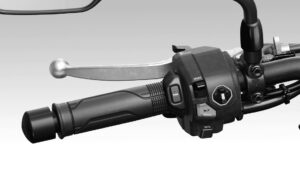
Something interesting that I found out about the Hornet 1000 when I was just looking at the Honda website and all of the other models was that the Hornet 1000 shares its 5-in TFT display and the left-hand side switch cube almost identically with the new 500 cc Hondas that have come out over the past couple of years, the 750 C Hondas like the Hornet 750 and the Transalp and even the CBR 650 and the CB 650R which were recently updated.
did with the e-clutch. They have the same exact display and same exact switch gear.
Another thing the Hornet has in common with quite a lot of Honda models is that it’s sharp and pointy tail light. It’s also shared with the NX500, the CBR500R, and both of the Honda 650s.
Verdict: Is the Honda CB1000 Hornet SP Worth It?
All those little nitpicks aside, because they really were nitpicks, there’s really no big standout flaw on the Hornet.
I think Honda has created an absolutely awesome machine in the form of this Hornet 1000 SP and that’s even before you take into account its stellar pricing.
I believe even after GST 2.0, this remains a value for money big bike purchase today.
Pricing vs Rivals
For reference, a similar amount of money will get you bikes like the Ducati Scrambler Full Throttle or the Triumph Street Triple RS. Neither of those can even come close to matching the Hornet on pure muscle.
And there’s really only one direct rival to the Honda. That would be the newly launched but very familiar looking Kawasaki Z100. That is the only direct rival.
And while it is also a very wellpriced machine, the big Zed is priced under 13 lakh rupees.
Hornet vs Kawasaki Z1000
In fact, however, when you take a deep dive into the spec sheet of the Kawasaki, you’ll realize that the Hornet weighs less, has quite a lot more power, and it gives you topnotch cycle parts like the Brembos and the Oolens that are just not found on the Kawasaki.
Service Costs and Ownership Experience
Ultimately, the Hornet is a 1000 cc Super Naked that you can realistically enjoy on a roads and even use on a day-to-day basis if you so like.
And for this relatively affordable price tag of a 1 cc bike, it really doesn’t leave you short changed in any regard.
This is a wellspeced, well-built rocket ship of a motorcycle that you don’t have to sell an arm and a leg for.
And since it is a Honda, you know that it is going to be bulletproof, reliable, last you years on end, and it will also have lower running costs than comparable rivals.
The owner of this bike also shared the Hornet’s first service bill with us, which amounted to just 6,475 rupees, including rupes 2,300 for the labor charge, which is very reasonable for a bike like this.
Having owned an Italian Super Naked in the recent past, I can vouch for the fact that Honda’s service costs are in fact a fraction of most comparable big bikes.
Final Thoughts
Ultimately, all I can hope for is that other manufacturers sit up, take notice of how impressive this Hornet is, especially at the price.
And hopefully, this is the start of a wonderful price war that Honda has kicked off for us motorcyclists.